
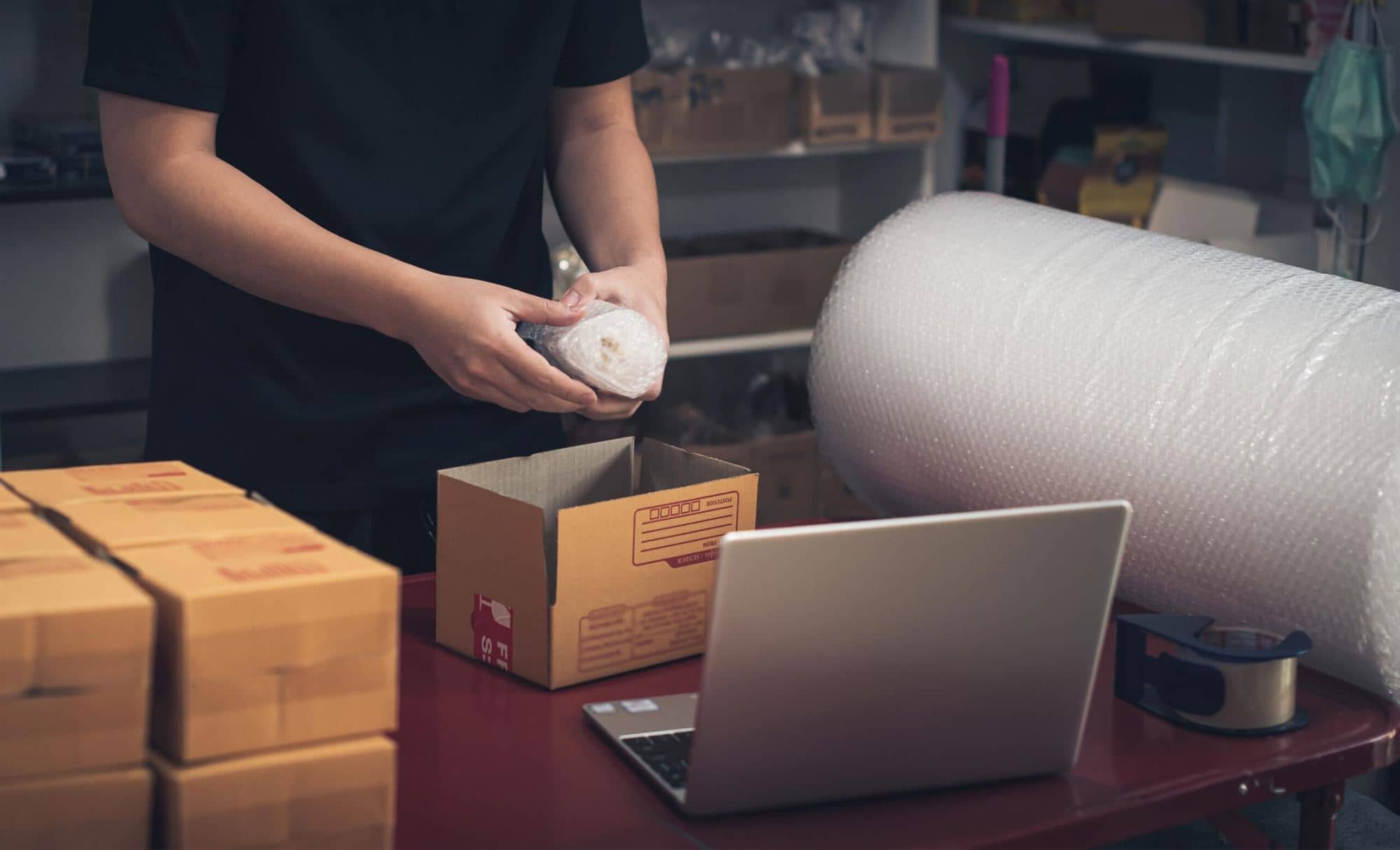
Kitting and product packaging
Kitting means several items are combined into one kit, package or campaign product. For it to work, the warehouse needs clear component relationships, stock rules and work instructions.
| Type | How it works |
|---|---|
| Fixed kits | Defined components are assembled into a set product or campaign box in advance. |
| Order-driven kits | Components are picked and assembled only when an order is created. |
| Stock control | The system needs to understand the relationship between the kit and its components, so component stock is reduced correctly. |
How a kitting flow is set up
- Define the kit structure (bill of materials).
- Decide the packaging and work instruction.
- Create a quality checkpoint.
- Test the stock logic.
- Follow material use and quality once live.
Other warehouse services
Value-added services are agreed as part of your setup. Examples of handling we carry out in the warehouse:
- Labelling of goods – cartons and pallets labelled for storage, customers or transport.
- Pallet breaking – full pallets split into cartons or units for picking. See pallet breaking in 3PL.
- Re-palletising and sorting – rebuilding mixed or loose goods into manageable units. See container unloading.
- Replenishment and stocktaking – keeping pick locations filled and stock balances accurate. See stocktaking.
Kit components need correct master data – see onboarding – and definitions such as BOM, kit and bundling are explained in the glossary.
Frequently asked questions
Is the same setup right for every company?
No. Requirements depend on your products, order profile, channels, systems, volumes and agreed service levels. This page shows a recommended structure, not a universal standard solution.
How do we know what our setup should include?
Start with your current process, clear business requirements and real data. Together we can then decide which steps, integrations and checks should be included.