
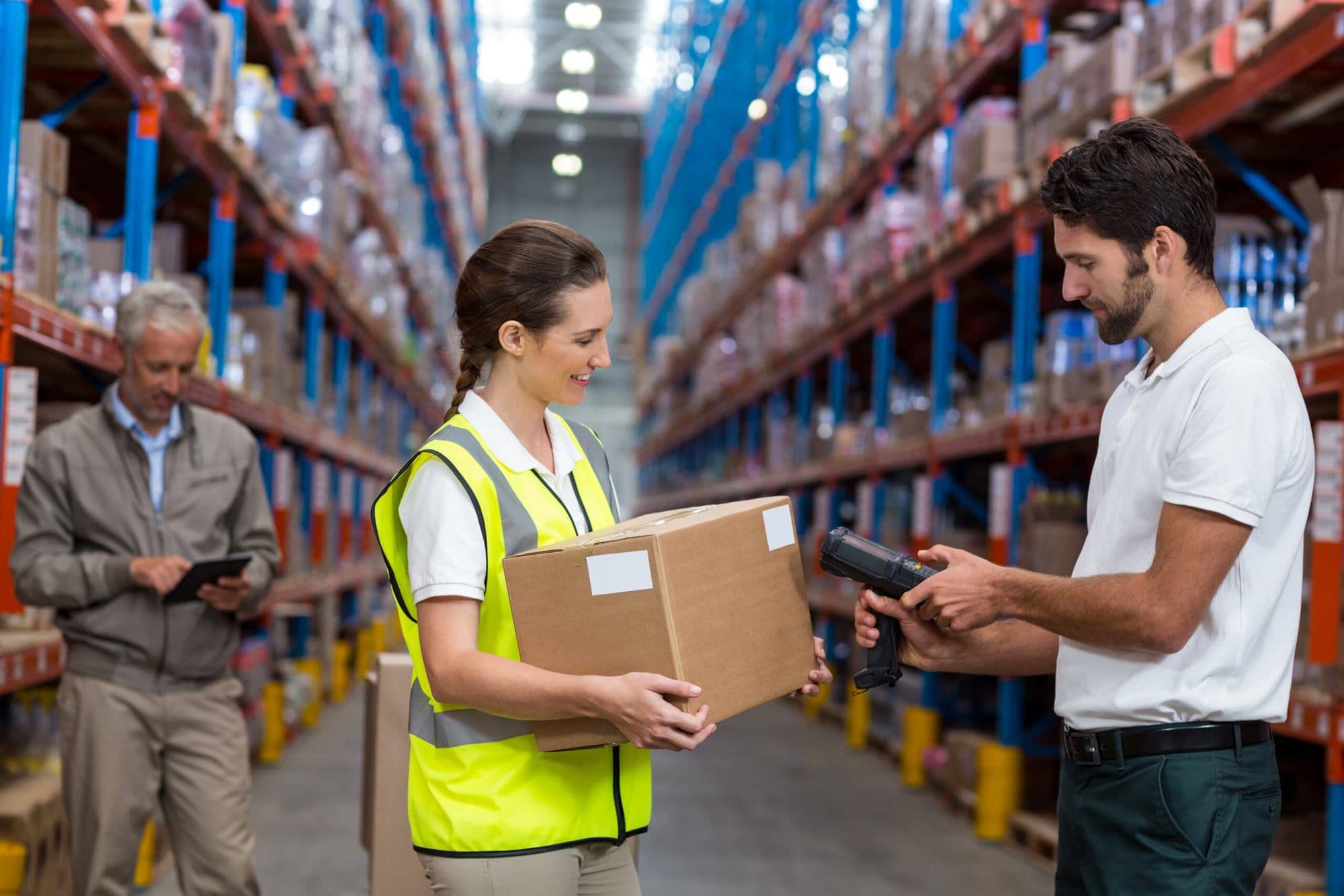
What container unloading involves
Container unloading (devanning) means taking goods out of a container and moving them to a receiving area or the next logistics step. Unlike ordinary pallet unloading, container goods may be floor-loaded, mixed or need sorting before they can be registered and stored. The working method therefore has to match how the container is loaded and what should happen to the goods afterwards.
A well-planned inbound flow connects the advance notice, receiving, checking, any sorting or palletising and the ongoing warehouse handling:
- Before arrival – the advance notice, packing list and information about how the container is loaded give a better basis for planning space and staffing.
- At receiving – unloading and checks are carried out according to the physical load and the agreed control points: visible damage, number of packages, labelling and other deviations.
- After unloading – goods can be sorted, palletised, labelled and registered before putaway or onward transport.
How the process works
- The container or delivery is announced so that time, type of goods and expected volume are known before arrival.
- Goods are unloaded and moved to a suitable receiving or sorting area.
- Packages, labelling and visible deviations are checked according to the agreed setup.
- Goods are sorted or re-palletised when the next part of the flow requires it.
- Goods are registered and moved on to storage, cross-docking or other agreed handling.
| Step | What it means |
|---|---|
| Advance notice | Information about what is coming makes it easier to plan space and handling. |
| Unloading | Goods are taken out of the container and placed safely on a receiving or work area. |
| Receiving inspection | Quantity, labelling and visible damage can be checked against the agreed documents. |
| Sorting / palletising | Loose cartons or mixed goods are divided and rebuilt for storage or onward transport. |
| Goods receipt | After checks and any processing, goods are registered in the regular warehouse flow. |
Hand unloading of floor-loaded containers
When a container is loaded with loose cartons or individual items rather than pallets, it has to be unloaded by hand. This is common with floor-loaded containers. The work depends heavily on carton size and weight, the number of items, how tightly the container is packed and what should be done with the goods afterwards.
| Factor | Why it matters |
|---|---|
| Number of packages | More individual cartons normally mean more manual handling. |
| Carton weight and size | Affects ergonomics, staffing and the right working method. |
| Number of SKUs | Mixed items may need sorting while the container is unloaded. |
| Labelling | Clear item and carton identities make sorting and registration easier. |
| Next step | Palletising, putaway or direct onward transport require different setups. |
Typical steps: review the packing list, carton sizes, weights and fill rate before arrival; prepare the receiving area, empty pallets and any sorting plan; unload and separate deviations or damaged cartons; sort and build pallets or other handling units; label, register and move the goods on.
Sorting and re-palletising after unloading
Container goods are not always ready for storage just because they are out of the container. Mixed items, loose cartons or unsuitable pallet patterns may need to be sorted and rebuilt first. The aim is to create clear, identifiable and manageable units before registration, putaway or distribution.
| Task | What it means |
|---|---|
| Sorting by SKU | Mixed items are separated so that each storage unit has clear contents. |
| Pallet building | Loose cartons are built into stable pallet units for storage. |
| Re-palletising | Goods are moved from the existing pallet format to another, as agreed. |
| Labelling | Cartons or pallets get an identity for storage, customer, order or destination. |
| Deviation handling | Damaged or unidentified goods are separated so they do not end up in normal stock balances. |
Sorting is easier when item numbers, barcodes or other identities are clear on both the goods and the documents. Read more about goods receiving and loading and unloading.
When this setup fits
- you receive recurring import deliveries in containers
- the container holds many packages or several SKUs, or is floor-loaded
- goods need checking, sorting or palletising before putaway
- you want one partner for unloading and the warehouse handling that follows
- you want to send part of the goods straight on instead of storing everything
What we need to know to plan
To assess staffing, space and tasks, the setup has to be based on the actual goods: container type, approximate number of cartons or pallets, product size and weight, number of SKUs, labelling, how the container is loaded and what should happen after receiving. Photos, a packing list or examples of previous deliveries make it easier to discuss a relevant setup without making assumptions.
If your goods are imported from outside the EU, customs clearance is handled by your customs broker before the goods enter our normal warehouse flow – see importing goods from outside the EU.
Frequently asked questions
Can you unload both 20-foot and 40-foot containers?
Capacity and the practical setup are confirmed for each case based on the container, the weight of the goods, how it is loaded and the next step you want. Send us the details and we will assess the setup concretely.
What happens after the container has been unloaded?
Goods can be checked, sorted, palletised, labelled, registered and moved on to storage or distribution, as agreed.
Can you handle floor-loaded containers?
Yes, floor-loaded goods can be hand unloaded. It normally requires more manual handling than palletised goods, so packing lists and carton data are important for planning.