
Common pallet types
| Pallet | Size (mm) | Where it is common |
|---|---|---|
| EUR pallet (EPAL 1) | 1,200 × 800 | Standard across Europe for retail and general goods |
| Half pallet (EPAL 6) | 800 × 600 | Retail displays, lighter loads |
| Quarter pallet | 600 × 400 | Store displays |
| FIN pallet | 1,200 × 1,000 | Finland and the Nordics, industry |
| Industrial / ISO pallet | 1,200 × 1,000 | Industry; common in container shipping |
| US pallet | 48 × 40 in (≈1,219 × 1,016) | Goods from North America |
EUR pallets are part of an exchange system: in many European flows a full pallet is swapped for an empty one on delivery. Whether pallet exchange applies should be agreed with carriers and recipients.
A standard 13.6-metre semi-trailer typically takes 33 EUR pallets on the floor. See freight terms: FTL, LTL, FCL and LCL.
Pallet positions and racking
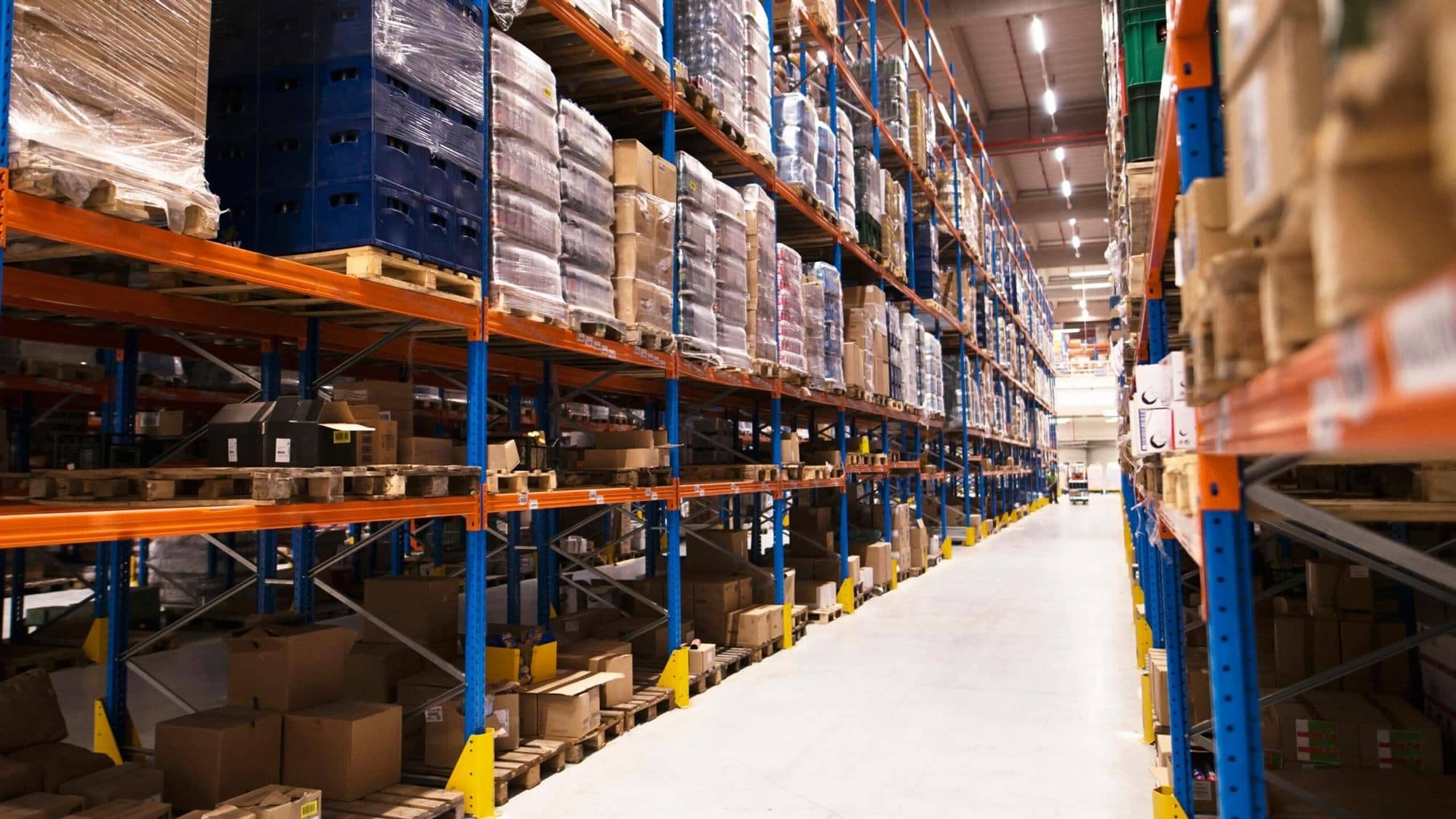
A pallet position is one rack location sized for one pallet. Pallet racking (selective racking) gives direct access to every pallet; drive-in or block stacking stores more pallets in less space but only gives access to the front pallet, which makes stock rotation harder – see FIFO, FEFO and LIFO.
What fits in a position depends on:
- Pallet height including the goods – rack beams are set at fixed heights.
- Weight – each beam level has a maximum load.
- Overhang – goods sticking out beyond the pallet edges can block neighbouring positions.
How pallet storage is priced
3PL storage is commonly priced per pallet position per day, week or month, sometimes with a minimum. Some setups price by shelf location, cubic metre or reserved area. What matters is that you can adjust the number of positions to your actual stock over the year. See 3PL pricing: what affects the cost.
Preparing palletised goods for a 3PL
- Use stable, undamaged pallets and wrap loads securely.
- Keep within agreed height and weight limits.
- Build single-SKU pallets where possible, or clearly separate mixed SKUs.
- Label each pallet with SKU, quantity and, if required, batch and SSCC – see barcodes.
- Send an advance notice with the number of pallets and contents.
At Karlholm Logistics we receive, check, store and pick from pallets, break pallets into cartons or units and handle goods that need floor space. See pallet handling.
Frequently asked questions
What size is a EUR pallet?
1,200 × 800 mm with a height of 144 mm. Licensed EUR/EPAL pallets are marked on the blocks.
What is a pallet position?
A storage location in a pallet rack (or a floor spot) sized for one pallet. The number of positions you use is a common basis for storage pricing.
Can a warehouse store non-standard pallets?
Often, but oversized, overhanging or very heavy pallets may need floor storage or special locations. Tell your 3PL about pallet types, dimensions and weights before the first delivery.
Short definitions in the glossary: Pallet · EUR pallet – Euro pallet · Pallet position · Rack · Pallet storage
This page gives general information about logistics terms. It is not legal, customs or tax advice, and it does not describe the terms of any specific agreement with Karlholm Logistics.